Japanese roasted coffee is still on the menu, or at least it was when I was writing this post.
Another bag from the same Osaka roaster. This one is a more standard approach with single‑origin beans.

Coffee Beans
This was the second bag of beans I bought from Lilo. This time, I went for something with the lowest acidity they had in storage. The beans are from the Indonesia Kerinci Mountain. Sumatra wasn’t previously in my scope, since I was concentrating on what was named the best beans on various forums around the world, looking for the sensation I got in Jamaica. This changed this year when I started researching pH, since I stopped looking at bean rankings for taste and instead looked at it from the perspective of pH. This also made me realize something – I should probably understand more about the region of the coffee when it’s not a blend. Maybe another perspective would let me understand the real target I am pursuing.
Let’s start with where exactly Kerinci Mountain is in Asia – Indonesia.
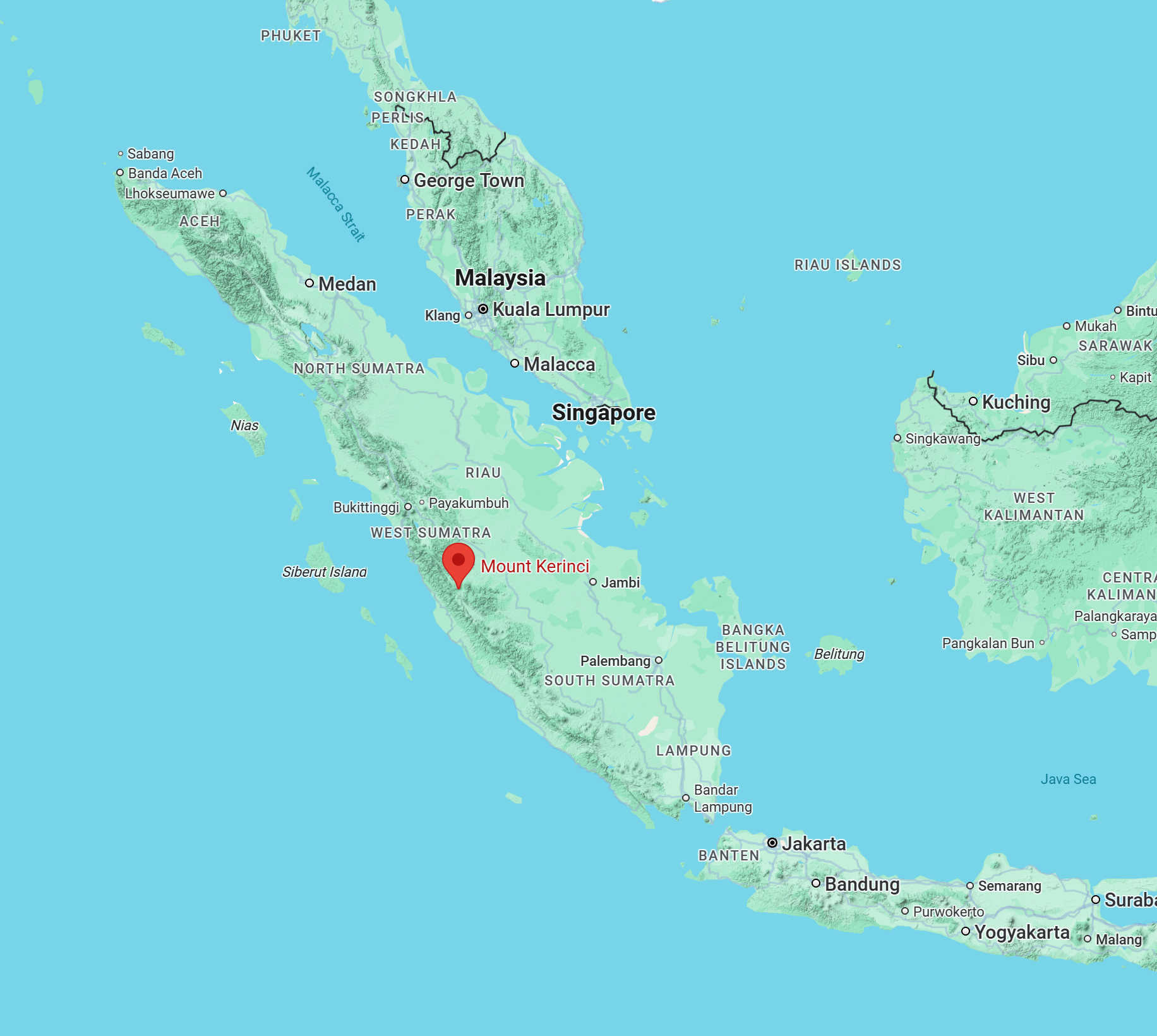
When it comes to the region itself as we can read on Wikipedia, it is part of the Barisan Mountains, a chain of volcanoes that spans from the extreme northwest of the island (in Aceh province) to the extreme southeast (in Lampung province). The key part to take from this is that not only is this the highest peak on the island of Sumatra, but in the whole of Indonesia. It’s also an active volcano, meaning its slopes should be very fertile. Since it’s also 3,805 meters above sea level, this means that the farms are at altitudes between 1,000 and 2,000 meters above sea level, which is very desirable for high‑quality coffee. The length of the day is around 12 hours throughout the whole year, and the temperature is around 22 degrees Celsius, making plantation conditions ideal and stable.
However, because of the location and those conditions, there is a problem, and that’s humidity. On average, 16 days per month are marked as muggy, meaning drying the coffee might actually be challenging. Giling Basah process (wet‑hulling) was the answer that was designed here, and that’s a unique method found almost nowhere else in the world. The bean is exposed to the elements while still moist, undergoing a rapid, “swollen” drying process. This creates the signature bluish‑green color of the raw beans and fundamentally alters the flavor.
Which, to me at least, says nothing. If I ever visit Indonesia I would like to see it, maybe this would let me understand it better. I always also wonder where those aromas and flavors come from that I cannot pinpoint in my cup of coffee. For example the current bag was described as following [1]
This coffee has a heavy body that reminds one of the earth, and at the same time, it has a herbal aroma. The coffee leaves a chocolate and slightly buttery sweetness after drinking, and when the temperature drops a little, orange flavors can also be detected.
Without further ado, let’s check it.
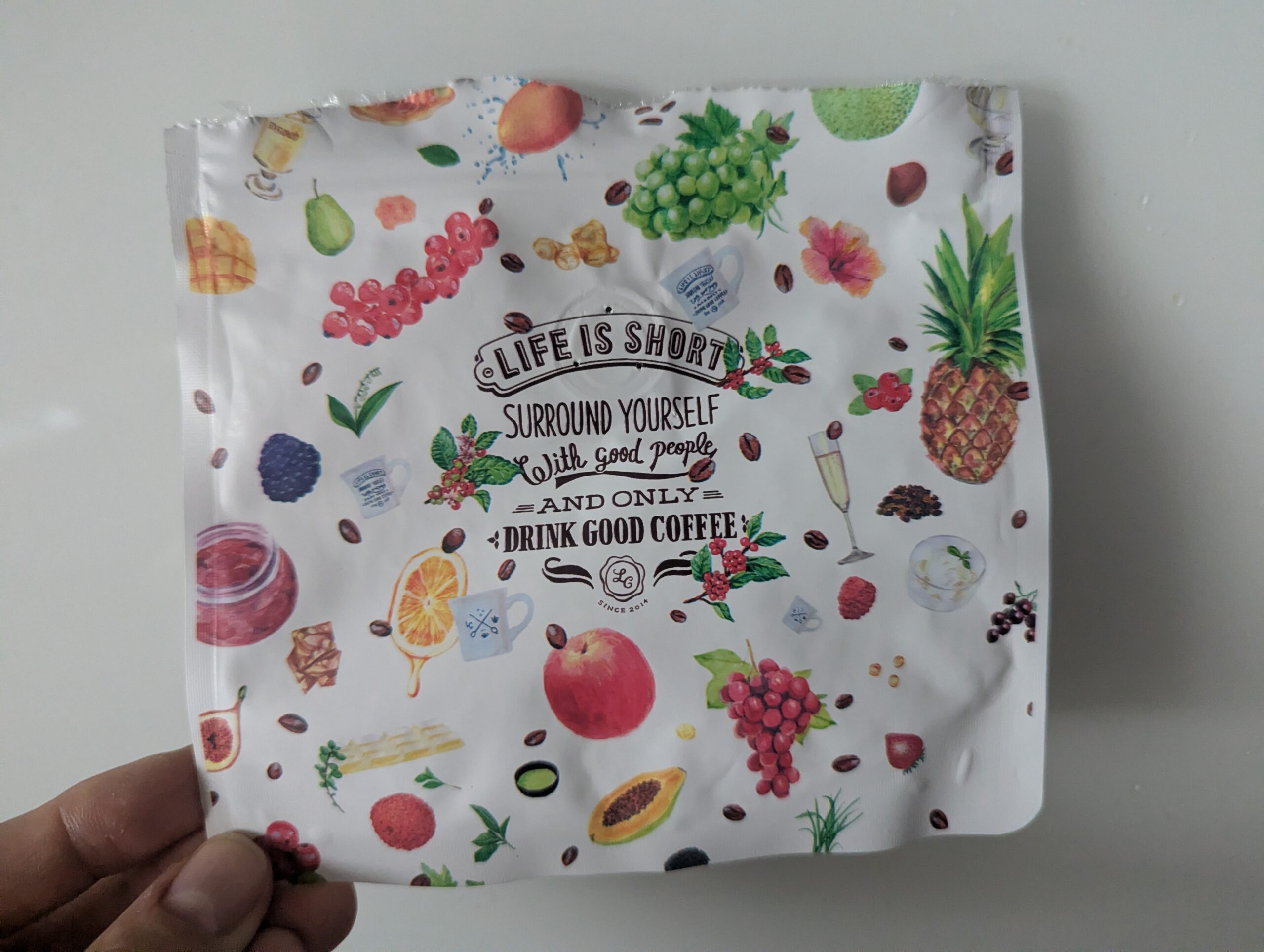
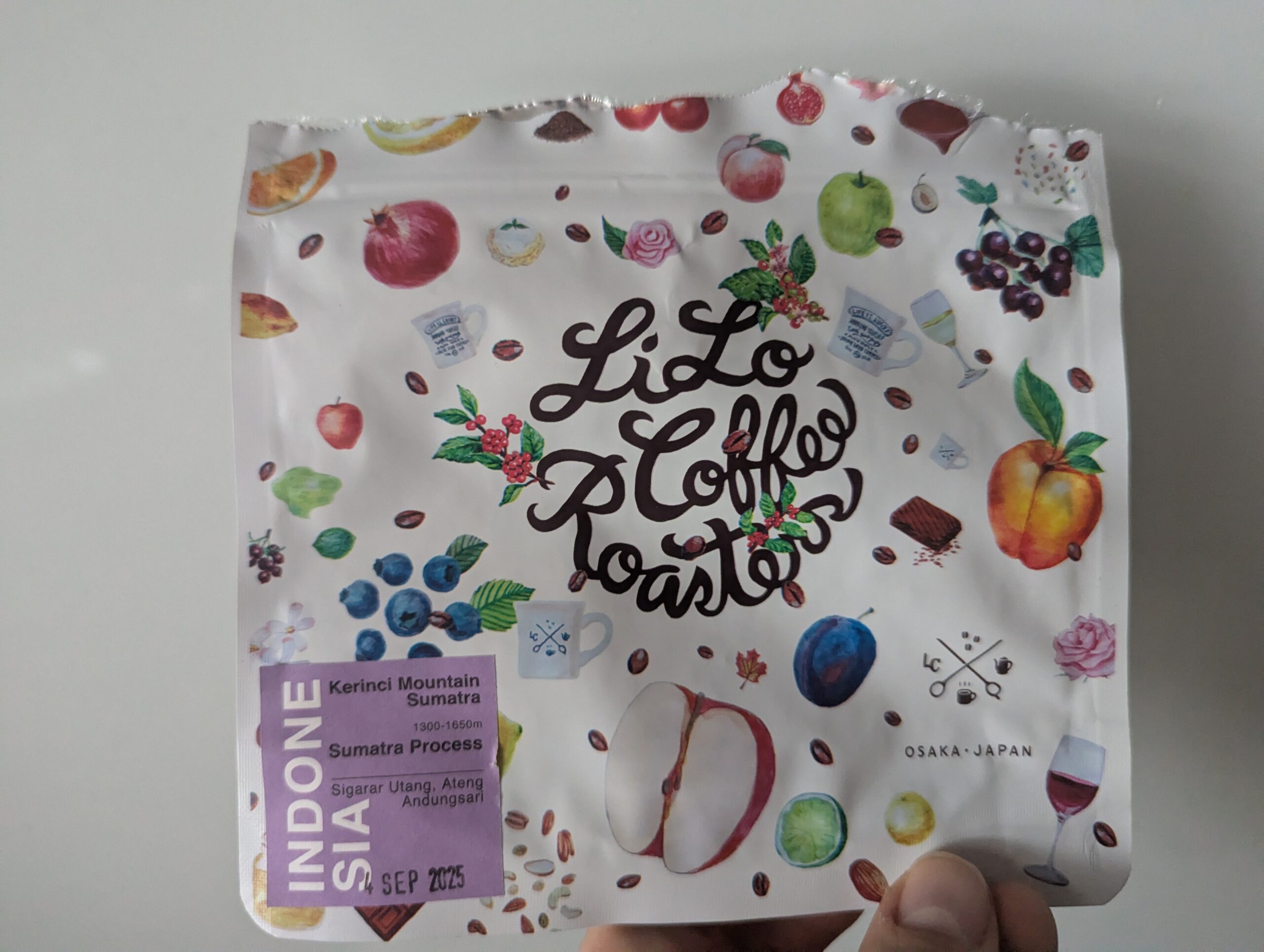
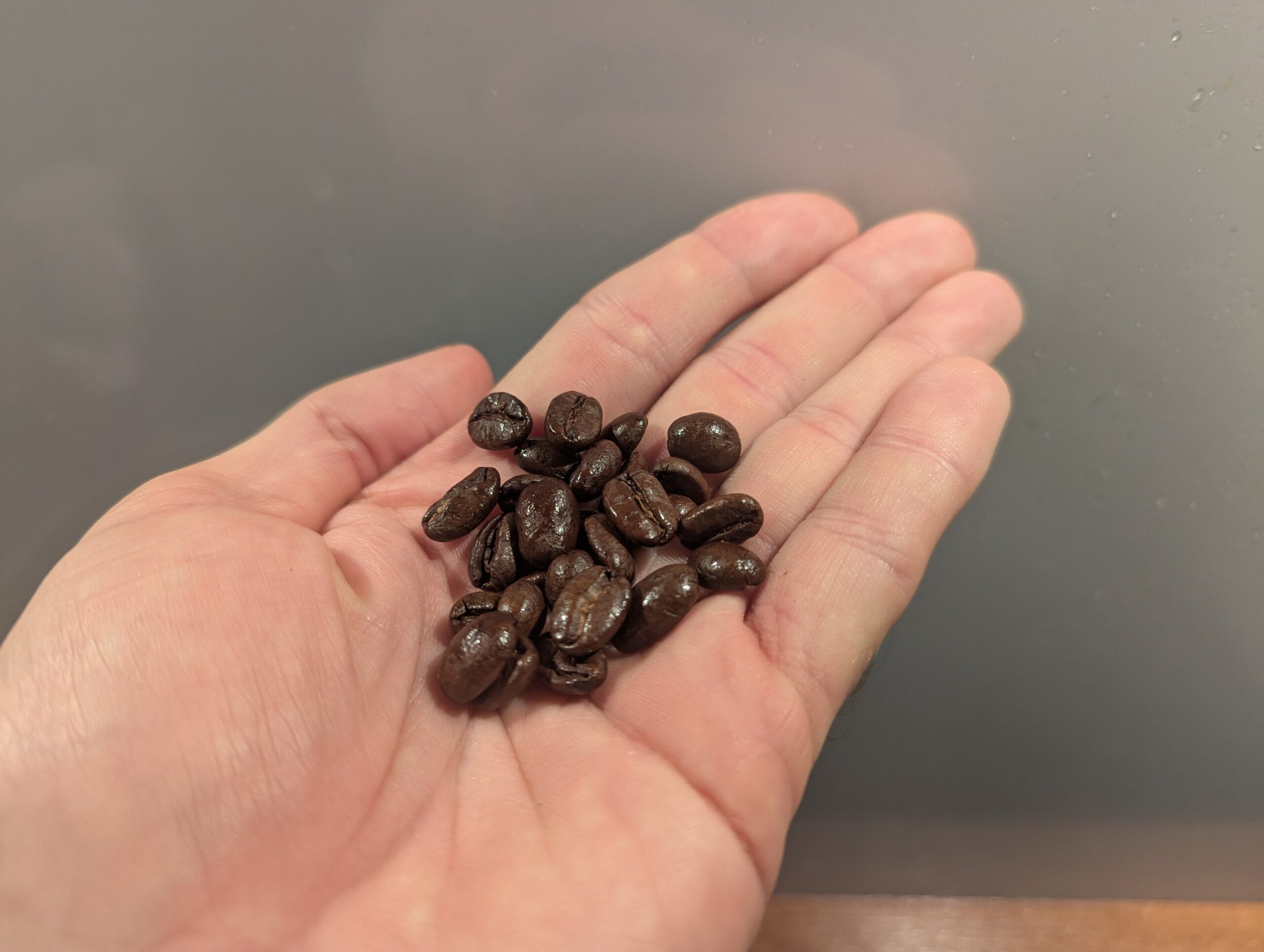
The beans were supposed to be full‑bodied and dark roast — level 5, whatever that means on Lilo scale. I couldn’t find it explained anywhere on the page, neither on the bag. However, they were one of the darker ones I had till now, especially before grinding.

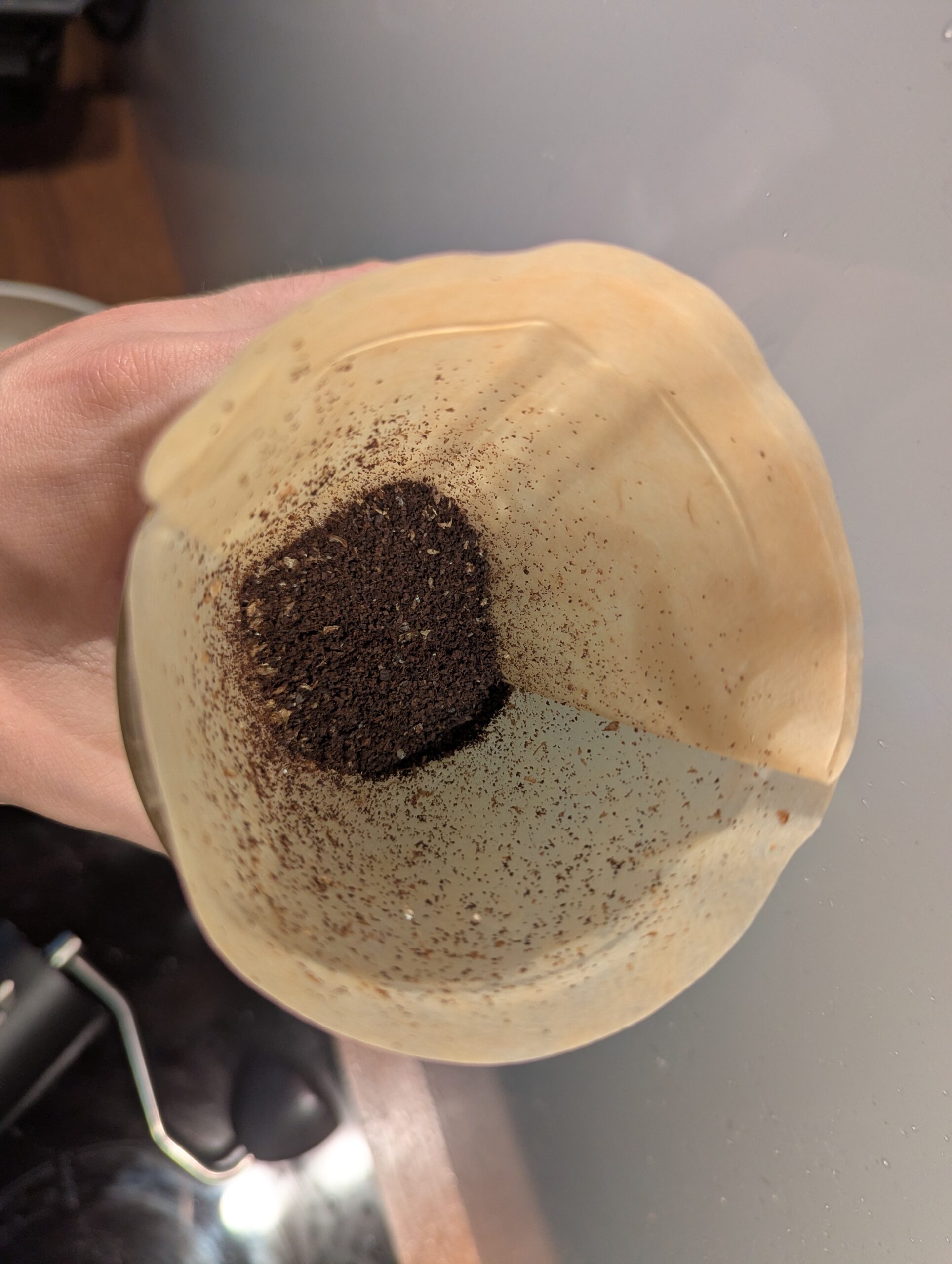
Ground, they were very loose, with a strong aroma of bitter coffee.

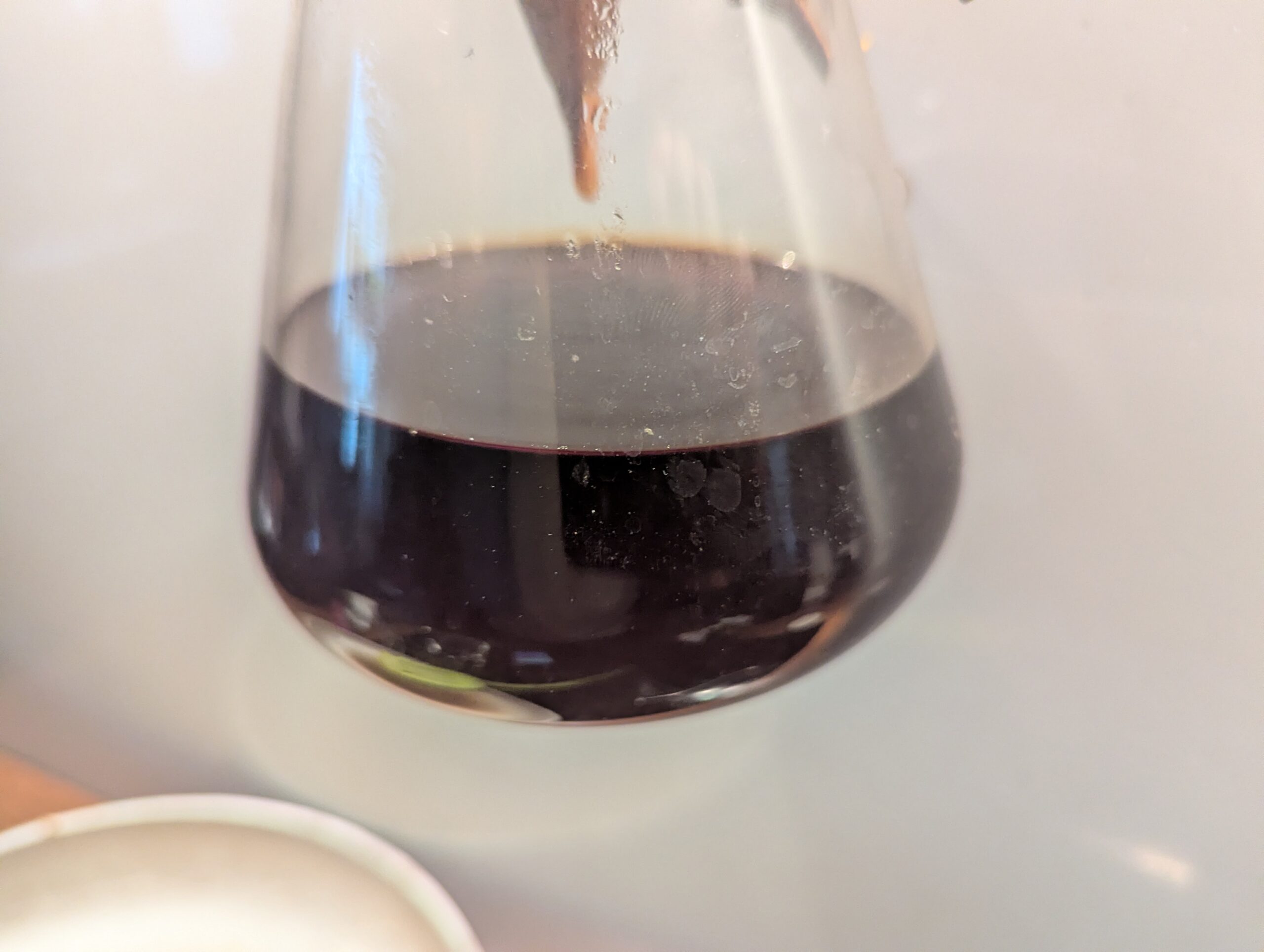
The color of the brew was as dark as the beans before grinding. Alongside the strong aroma, I got my hopes up. Would it jump to first place in my personal ranking? In the end no, there was no bitterness or fruit flavors as advertised, even after a few approaches during the week, but it was still a very good cup of coffee.
What’s interesting I also noticed that Lilo has it’s own brewing method guide that was a bit different from what I did- https://coffee.liloinveve.com/pages/origami-dark-roast. I was wondering if this would change anything in taste or acidity. Since I still trying it out it will probably write more about it in the next post.
Acidity Research
This one was supposed to be of the lowest acidity in Lilo menu, so I was hoping for a score closer to 6 in pH. Unfortunately it came in the reference region.
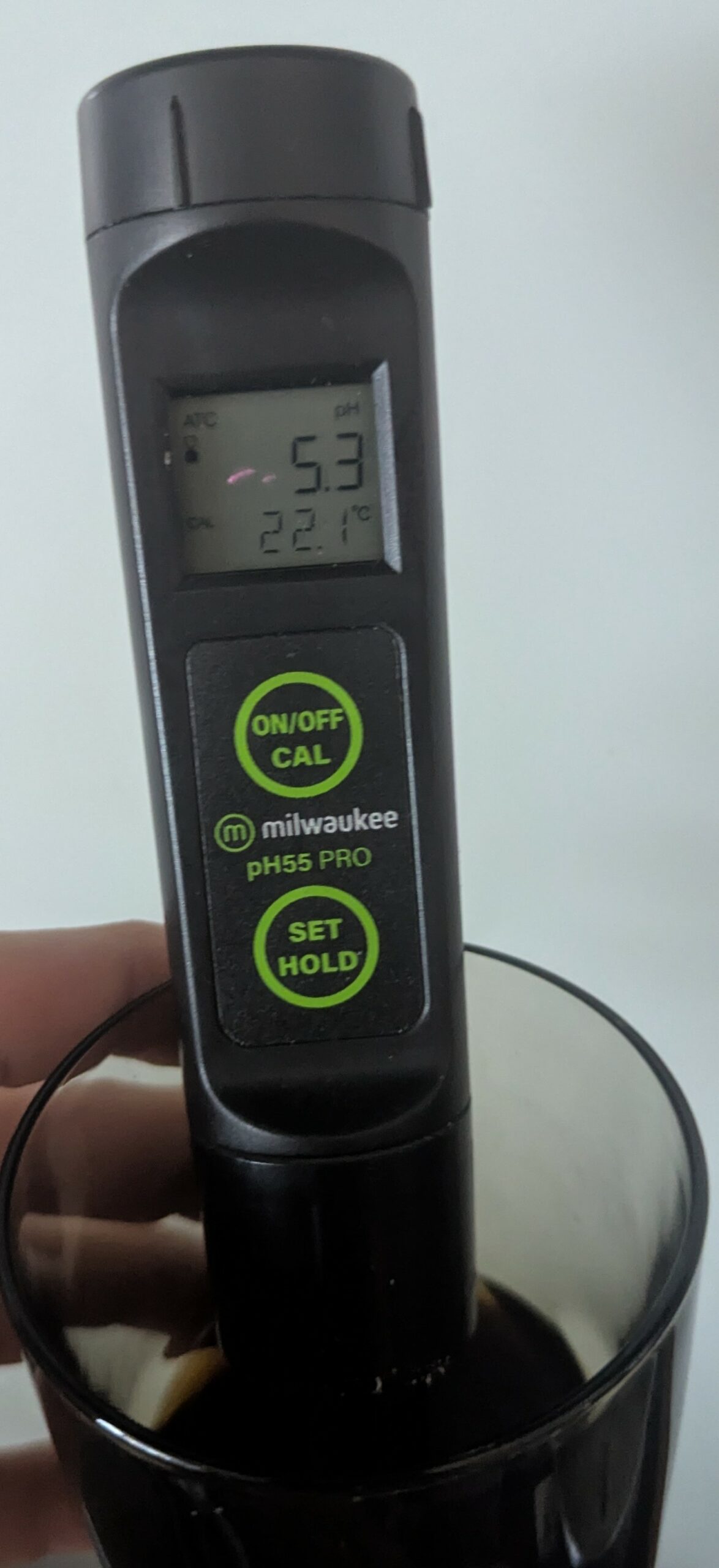
Here’s the data comparing the reference coffee with all of them till now
| Coffee | Country (beans) | Country (roast) | Temperature | pH | Method |
| Kora Coffee | Dominican Republic | Dominican Republic | 22,8 | 5,8 | 1 – Single pour |
| Auchan (Reference) | Vietnam | Poland | 22,0 | 5,2 | 1 – Single pour |
| Compagnia Dell’Arabica Caffe Corsini | Guatemala | Italy | 22,3 | 5,4 | 1 – Single pour |
| LiLo Coffee Roasters 11th Anniversary GEISHA Blend | Ethiopia, Colombia | Japan | 22,2 | 4,9 | 1 – Single pour (Chemex) |
| LiLo Coffee Roasters 11th Anniversary GEISHA Blend | Ethiopia, Colombia | Japan | 22,2 | 4,9 | 1 – Single pour (Hario) |
| Lilo Coffee Roasters INDONESIA Kerinci Mountain | Indonesia – Sumatra | Japan | 22,1 | 5.3 | 1 – Single pour (Chemex) |
Coffee Rating
- Flavor – 6 There should be a mix of chocolate with oranges here. While I didn’t notice such notes, it was pleasant in taste.
- Bitterness – 9 Not bitter at all, a really pleasant all‑rounder.
- Acidity – 9 It was supposed to be of low acidity; however, it was rather in the normal range.
- Sweetness – 6 It felt sweet; however, maybe it was just my imagination?
- Initial rating – 8 A good all‑rounder coffee. I would gladly drink another cup. When compared to the blended pack I had earlier, they are worse in my opinion, and that’s the only reason for an 8 instead of a 9.
- After time rating – 8 – Nothing really changed after almost two months of the beans sitting inside the container, at least for me. This means your reserves are safe.
Conclusion
It was a good one; however, I enjoyed the previous blend from Lilo more and it would be the one I go for. Maybe actually blends are more in my alley? Still, after those 2 bags I can understand why Lilo is so popular and “trendy”. Their roasts are for sure a bit of a benchmark for me in the future, and I will gladly buy a bag if I am ever in Japan again.